
Soho House. The exclusivity paradox.
Soho House was meant to reset by going private, and that plan has run into trouble.
THE GIST ON SOHO HOUSE: "The Exclusivity Paradox"

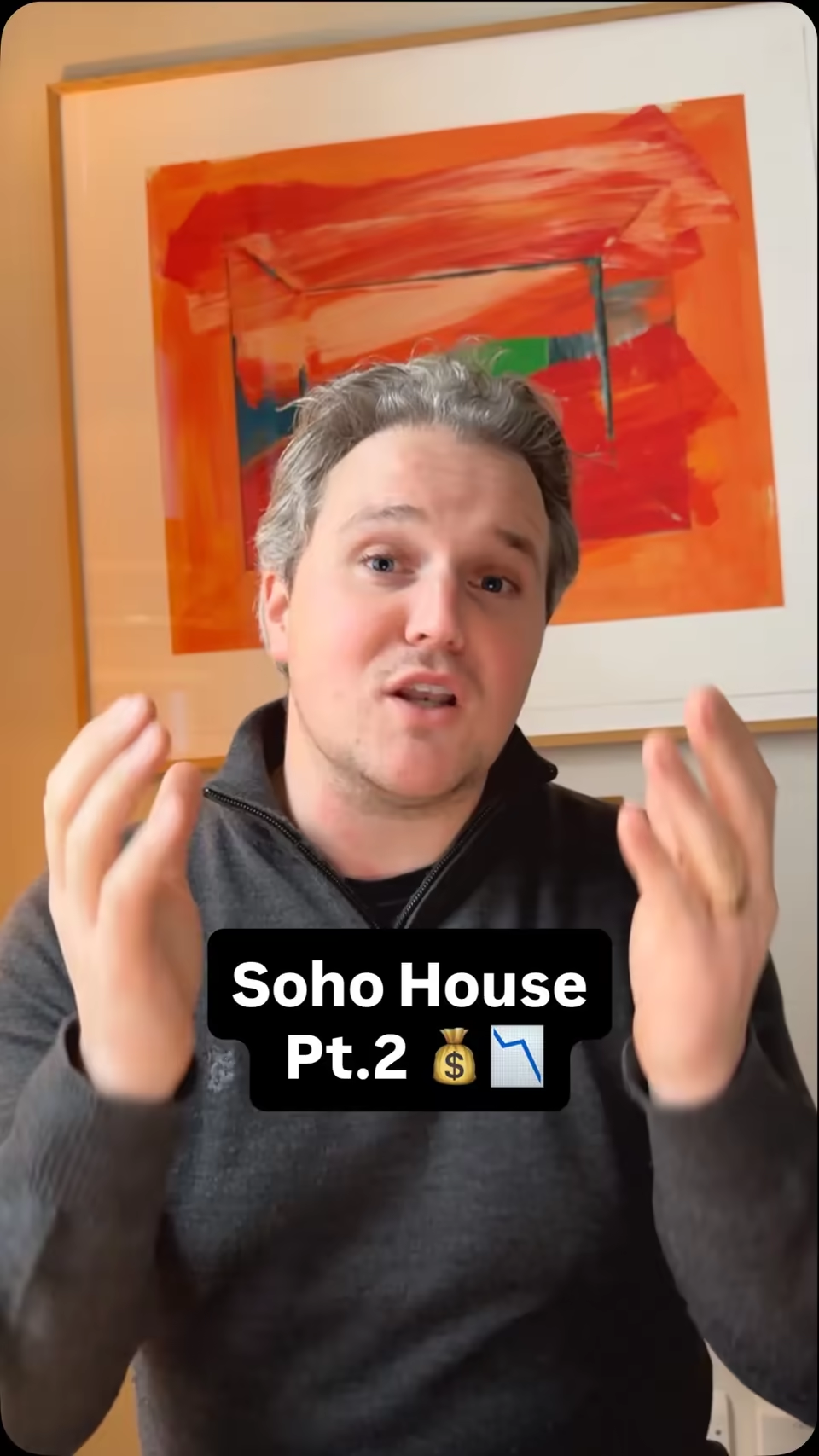
What went wrong with the deal?
Last year Soho House agreed a $2.7 billion take-private deal. The plan was to step away from the public markets, slow everything down and fix it from the inside. This week, one of the lead backers pulled $200 million from the funding and the share price dropped by 20%.
Is it the brand?
The hesitation has nothing to do with the brand. It's about whether the only way to fix the business might break it. Soho House sells a lot of things, but at its core it sells space: warm corners, relaxed service, the feeling of being inside something curated. That seems to have been lost.
What is the paradox?
To get it back they need fewer people and more exclusive-feeling clubs. But hospitality has fixed costs and membership growth pays the bills, so the moment a turnaround requires shrinking, investors hesitate. Growth fills the room, but the offering only works if it doesn't feel full.
Can a members club shrink and still make money?
Your take. One tap, then see how everyone else voted.
Quick answers
What happened to the Soho House deal?
A lead backer pulled $200 million from the funding and the share price fell by 20%.
Why do investors hesitate?
Fixing the experience means shrinking, which breaks the growth model.
What is the paradox?
Growth fills the room, but the offering only works if it doesn't feel full.
See you on the next one.
What should the next one be? Suggest a topic for Huw to explain
The conversation
Comments
Nothing here yet. Start the conversation: Huw reads every comment before it is published.


