
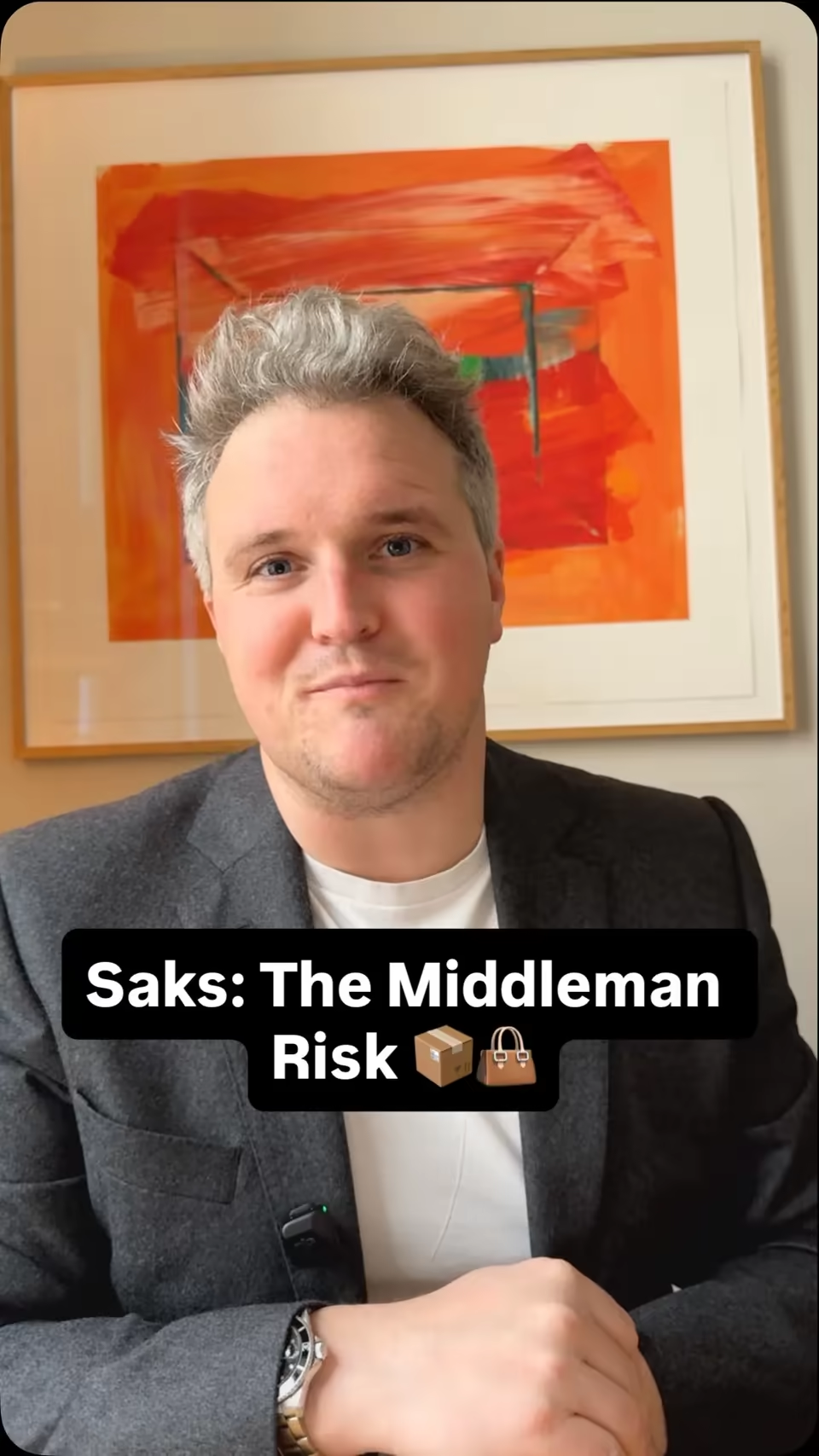
Saks. The middleman risk.
Saks Global looked bulletproof until it filed for Chapter 11. Being the middleman has turned into a burden.
THE GIST ON SAKS: "The Middleman Risk"

What happened to Saks Global?
The group behind Saks Fifth Avenue, Bergdorf Goodman and Neiman Marcus has filed for Chapter 11 with billions in debt, and about $1.75 billion lined up to keep all the stores open while it restructures. Over a hundred luxury brands have paused shipments because they're worried about getting paid.
Why is it so fragile?
Luxury department stores are built around curating the right products for the discerning customer. If you can't access the products, the illusion collapses, because what have you got left? On top of that, brands increasingly want to sell direct and own the relationship.
What is the middleman problem?
Saks is left with heavy costs and inventory risk even more exposed. It's a rare occasion when being a middleman is more of a burden than an advantage: you still have all the costs, but the power of supply is slipping away. After that, you're basically paying rent for someone else's brand.
Do department stores still have a place?
Your take. One tap, then see how everyone else voted.
Quick answers
What did Saks Global do?
It filed for Chapter 11, with about $1.75 billion lined up to keep stores open.
Why did brands pause shipments?
They were worried about getting paid.
Why is being a middleman harder?
The costs stay but the power of supply slips away as brands sell direct.
See you on the next one.
What should the next one be? Suggest a topic for Huw to explain
The conversation
Comments
Nothing here yet. Start the conversation: Huw reads every comment before it is published.


