
Play-Doh. Own the part that does nothing.
Play-Doh began as a wallpaper cleaner and is made of flour, water and salt. Hasbro has owned the category for 70 years by trademarking the one thing that does not matter: the smell.
THE GIST ON PLAY-DOH: "Smell Test"

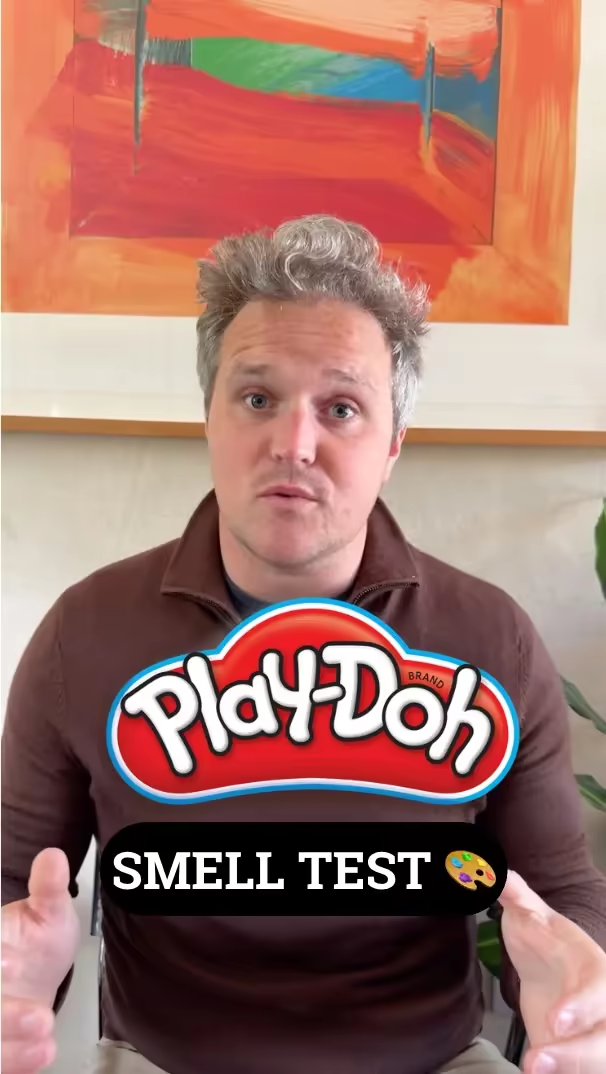
How did Play-Doh start?
Play-Doh launched in 1933 as a wallpaper cleaner. The recipe is flour, water and salt. Kids could make it this afternoon, and Hasbro has owned the category for 70 years because they pulled off a legal trick that no perfume brand can use.
Kutol Products was an Ohio soap company. In 1933 they won a contract to make wallpaper cleaner, because coal heating had turned every wall in America black with soot. Their putty took the soot off without poisoning the kids, and it sold for 20 years.
How did a cleaner become a toy?
Then American homes switched from coal to gas and the soot stopped. A nursery school teacher noticed her class were modelling with leftover cleaner. So Kutol took the detergent out, put colour and scent in, and sold it as a toy. They called it Play-Doh.
What did Hasbro trademark?
In 2018, Hasbro trademarked the smell. You can only trademark a smell when it isn't essential to what the product does. That's why Chanel can't trademark No. 5: the smell is the product. The whole perfume industry exists because of this.
Play-Doh doesn't need to smell like anything to work as modelling clay. So Hasbro legally locked the smell down. The recipe is generic, but the smell is theirs.
How do big brands hold their ground?
They find something that has nothing to do with how the product works, and then they own it. Tiffany's blue. Cadbury's purple. Coca-Cola's bottle. The part of the brand that isn't doing anything for the customer is the only part the law lets you keep. What do you love about your favourite brand that has nothing to do with what it does?
What's the smell you'd recognise anywhere?
Your take. One tap, then see how everyone else voted.
Quick answers
How did Play-Doh begin?
It launched in 1933 as a wallpaper cleaner that removed coal soot from walls, then became a toy when a nursery school teacher noticed her class modelling with it.
Why can Hasbro trademark a smell?
You can only trademark a smell when it isn't essential to what the product does. Play-Doh doesn't need a smell to work as modelling clay, whereas perfume's smell is the product.
What other brand features work like this?
Tiffany's blue, Cadbury's purple and Coca-Cola's bottle.
See you on the next one.
What should the next one be? Suggest a topic for Huw to explain
The conversation
Comments
Nothing here yet. Start the conversation: Huw reads every comment before it is published.


