
Car boot sales. Two quid for a maybe.
Car boot sales were invented by an antiques dealer looking for cheap stock in a field in Kent in 1980. They still run exactly as he designed them, because Britain's happiest market runs on selling hope.
THE GIST ON CAR BOOT SALES: "Two quid for a maybe"

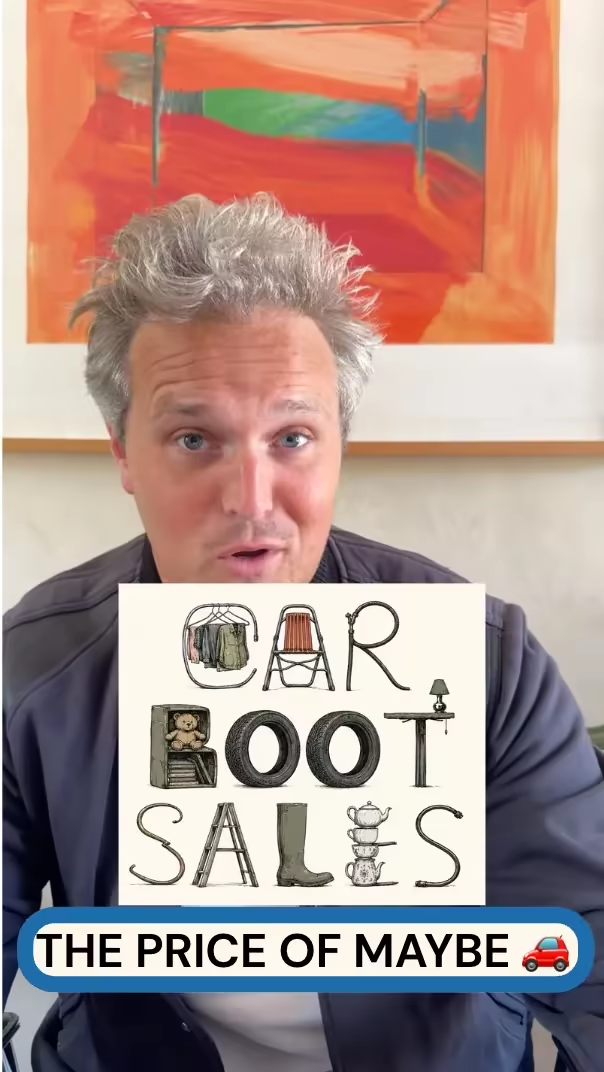
How does a car boot sale really work?
You find a load of crap in your house you don't want, and turn up to a field at some ungodly hour like 5am. Dealers arrive right behind you, paying for early access. They hoover up all the good stuff straight off the tables: signed cricket bats, vintage jackets, mid-century lamps, that weird porcelain dancing frog your granny had.
All gone before the public arrives. What's left is what three dealers rejected.
What happens to the good stuff?
It ends up on Vinted or eBay, or in an antique shop in the Cotswolds, marked up 10, 50, sometimes even 100 times what they paid. The car boot sale is a wholesale trade fair, and the public are the after party.
Why do we keep going?
Because the £2 entry buys a very possible maybe. The chance that today is the day you find a Rolex or a Banksy or a Tiffany lamp in a plastic bag next to some Beanie Babies. It's all about the maybe.
What is the business underneath?
Selling hope. The lottery takes £8 billion a year. Sports betting takes £10 billion. Premium Bonds, trading apps, even Rightmove for a house you can't afford. Every one sells you the same thing: a licence to hope. Some even tax you for it.
The car boot is the honest, sometimes sunlit version of that. Two quid for a Sunday morning full of hope. The cheapest maybe in the country.
Car boot sale: bargain hunt or wasted Sunday?
Your take. One tap, then see how everyone else voted.
Quick answers
Who invented the car boot sale?
An antiques dealer looking for cheap stock in a field in Kent in 1980, according to Huw.
Do dealers get there first?
Yes. They pay for early access and take the best stuff before the public arrives.
Why do people still go?
The £2 entry buys the chance that today is the day you find a Rolex or a Banksy.
See you on the next one.
What should the next one be? Suggest a topic for Huw to explain
The conversation
Comments
Nothing here yet. Start the conversation: Huw reads every comment before it is published.


