
Valentine's Day. The $29 billion obligation.
Valentine's Day is worth $29 billion a year. The holiday is 600 years old. The duty to spend on it is about 100.
THE GIST ON VALENTINE'S DAY: "The $29 Billion Obligation"

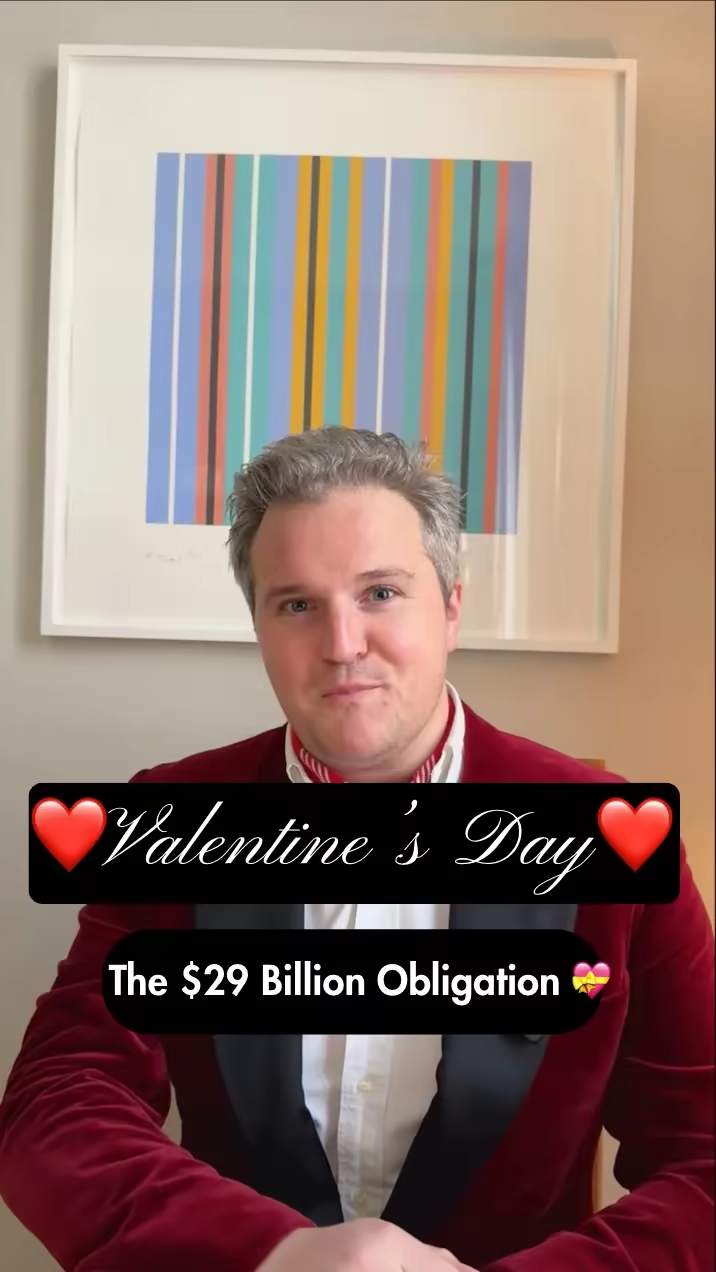
How did Valentine's Day become a $29 billion industry?
For 600 years it was a private gesture, a poem, a letter. Then in 1913 Hallmark started selling cards. Chocolatiers made heart-shaped boxes, florists marked up roses, restaurants added set menus, everyone wetting their beak on the same emotion.
What are we actually buying?
Far more than the material stuff. We're buying the relief of having done it, because somewhere over the last 100 years, not doing it started to mean something. Once that's true, it's a licence to print money.
Every industry has figured this out. Mother's Day, Father's Day, even Christmas: create the cultural expectation first, sell the solution second.
Did we need an obligation?
Maybe the real genius isn't that they manufactured obligation, but that they worked out we actually needed one. Demonstrating love is vulnerable, uncomfortable and easy to put off, especially if you're British.
Valentine's Day removes all of that. It tells you exactly when, what and how much. Which poses a question: without it, would we even do it?
Do you mark Valentine's Day?
Your take. One tap, then see how everyone else voted.
Quick answers
How old is Valentine's Day?
Over 600 years, but the obligation to spend on it is about 100 years old.
When did the selling start?
In 1913, when Hallmark started selling cards.
What is actually being bought?
The relief of having done it, because not doing it has come to mean something.
See you on the next one.
What should the next one be? Suggest a topic for Huw to explain
The conversation
Comments
Nothing here yet. Start the conversation: Huw reads every comment before it is published.


