
Books. Some things don't need fixing.
Physical books still outsell ebooks by three to one, in a digital economy where screens were meant to replace paper. Not everything improves when it becomes frictionless.
THE GIST ON BOOKS: "Why Print Still Wins"

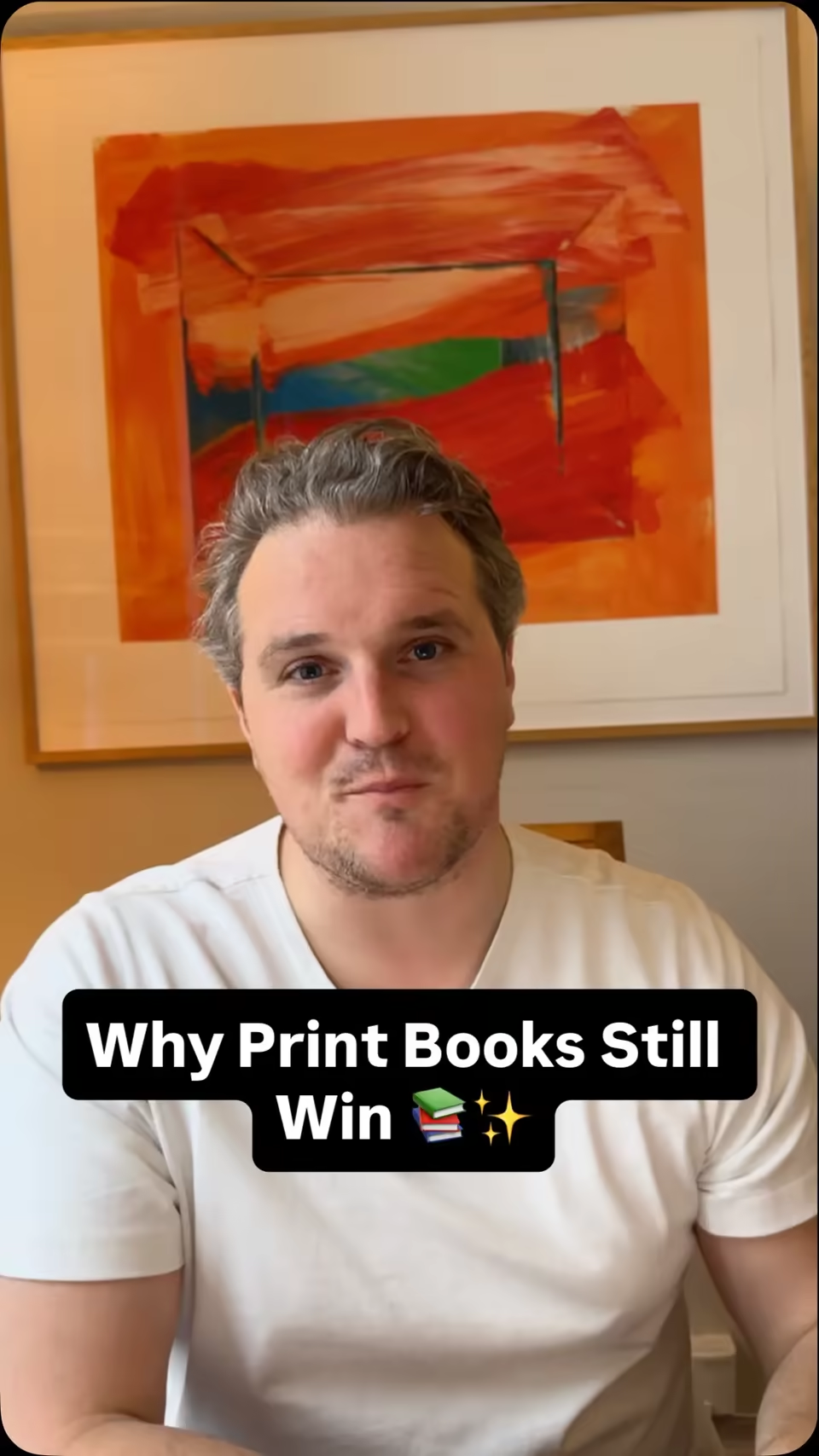
Did ebooks replace print?
For more than a decade the assumption was obvious: screens would replace paper. Ebooks and Kindles went mainstream and audiobooks exploded.
Then digital stopped growing at the pace everyone expected. Today physical books still make up roughly three quarters of all book sales.
Why do people still buy paper?
People don't read to ingest knowledge as if it's being uploaded to their brains. Reading is tactile and intentional, and you actually own a physical book. You never truly own a digital one.
A physical book reminds you of when you got it and where you read it. You can lend it, and you can keep it as evidence that you once sat with an idea long enough to be changed by it.
What does it tell us about digital?
We see the same desire for the tangible in vinyl, film photography and printed photos. Not everything improves when it becomes frictionless. Some experiences lose value when they're optimised too far.
Books offer something very rare today: focus, permanence and ownership. That is why they still dominate.
Paper or screen?
Your take. One tap, then see how everyone else voted.
Quick answers
How much of book sales are physical?
Roughly three quarters, according to Huw, or about three to one over ebooks.
Why do people still prefer print?
Reading is tactile and intentional, and you truly own a physical book, which you can lend and keep.
What other things are making a comeback?
Vinyl records, film photography and printed photos.
See you on the next one.
What should the next one be? Suggest a topic for Huw to explain
The conversation
Comments
Nothing here yet. Start the conversation: Huw reads every comment before it is published.


