
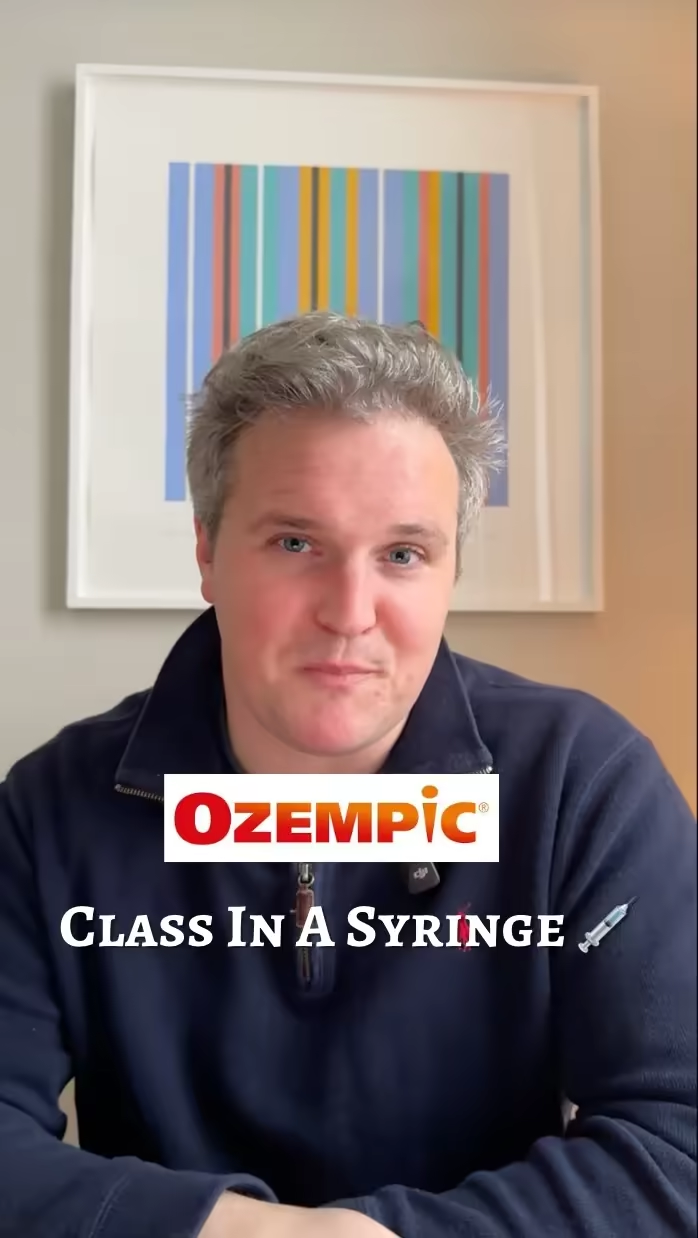
Ozempic. Class in a syringe.
Ozempic has changed the value of being thin, because for the first time in history it can truly be bought. The rich have Ozempic and the poor have body positivity.
THE GIST ON OZEMPIC: "Class in a Syringe"

What has Ozempic changed?
A diabetes drug is collapsing the food industry. People aren't eating as they used to and fast food stocks are crashing. But it's about more than food. It's about every Brit's favourite pastime: class.
Thinness has always signalled status and wealth. Before 1900, fat meant rich. Now thin costs 200 pounds a month.
Who gets it?
The NHS can give it to only a quarter of a million people, while 1.6 million are on it privately. Once again wealth determines what your body looks like. For all of human history your body was mostly out of your control: genetics, metabolism. Ozempic breaks that.
Why does the economic argument matter?
The gap is biological and economic. Healthier people are more productive, earn more and live longer, so the gap compounds. And healthier people cost less in emergency care and contribute more in taxes. Putting it behind a paywall is unfair and economically stupid.
We either let inequality become biological and watch productivity collapse, or make it available to everyone. If a 200 pound injection can prevent diseases that cost billions, making it inaccessible could be the most expensive decision we ever make.
Should the NHS give out weight-loss jabs more widely?
Your take. One tap, then see how everyone else voted.
Quick answers
How many people get Ozempic on the NHS?
A quarter of a million, against 1.6 million using it privately.
How much does it cost privately?
200 pounds a month.
What is Huw's economic argument?
Healthier people cost less in emergency care and pay more tax, so withholding it could be very expensive.
See you on the next one.
What should the next one be? Suggest a topic for Huw to explain
The conversation
Comments
Nothing here yet. Start the conversation: Huw reads every comment before it is published.


