
Ocado. It trained its own replacement.
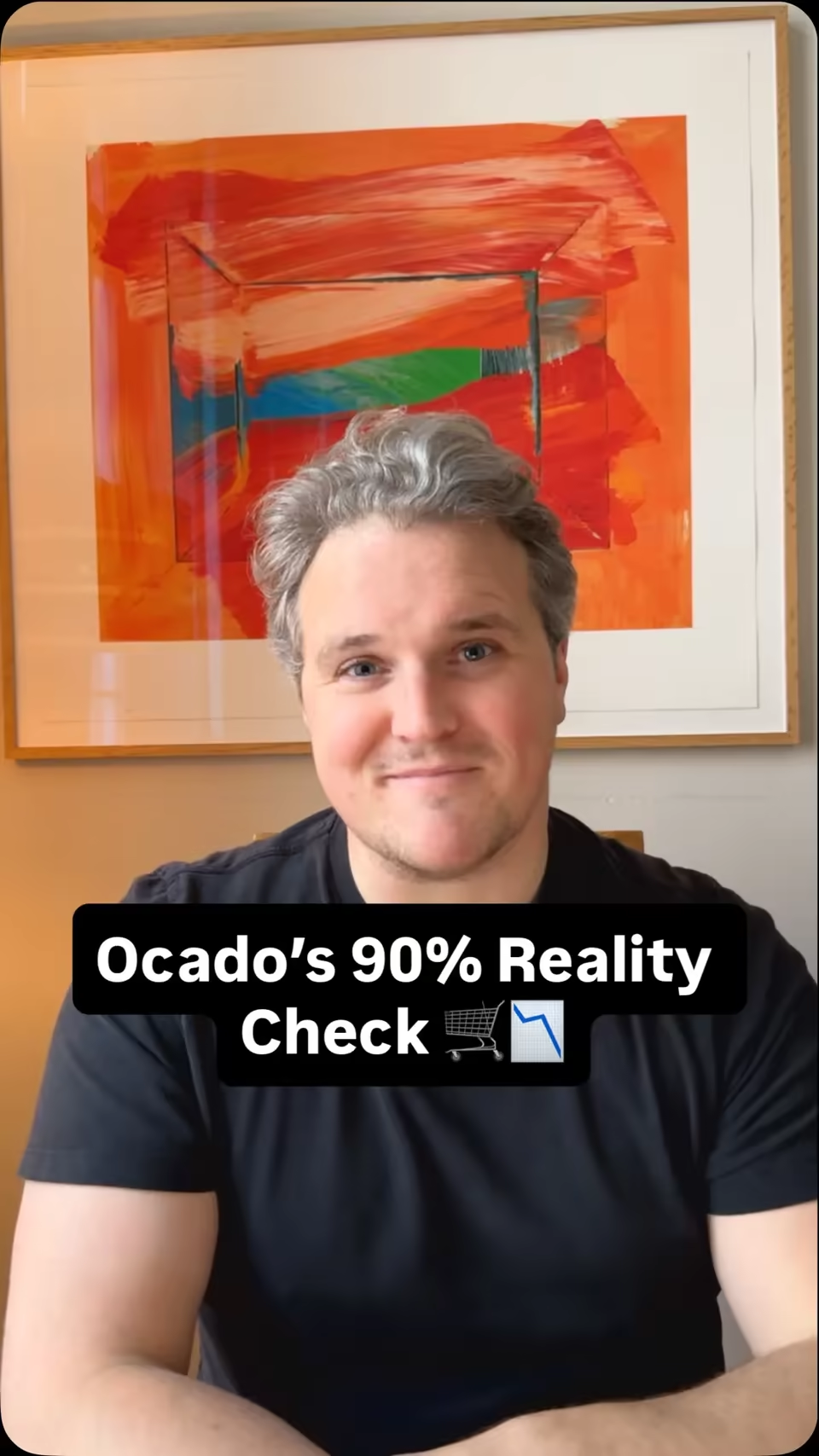
The share price is down 90%, and Huw's argument is that it is because Ocado was so successful. It helped supermarkets crack online delivery, then watched them do it themselves.
THE GIST ON OCADO: "Victim of Its Own Success"

What happened to Ocado?
Ocado's share price is down 90%. It was once seen as one of Britain's most advanced tech companies, with world-class systems for online grocery, automated warehouses, routing software and last mile delivery.
Supermarkets didn't have the capability, so they paid Ocado to build it for them.
How did success become the problem?
By helping supermarkets crack online delivery, Ocado trained its own replacement. Once retailers understood demand patterns, logistics and automation, they stopped outsourcing and built it themselves.
Supermarkets don't want third parties owning something that central. Delivery has gone from a bolt-on to the backbone of grocery.
What did Ocado never own?
The full chain. It didn't have products, pricing power or customer loyalty. It was infrastructure, not a destination.
The warning for modern business: if you build critical infrastructure but don't control the end customer, you're always teaching people to move on without you.
Who delivers your food shop?
Your take. One tap, then see how everyone else voted.
Quick answers
How far has Ocado's share price fallen?
Down 90%, according to Huw.
Why did supermarkets stop paying Ocado?
Once they understood demand, logistics and automation, they built delivery themselves rather than let a third party own something so central.
What was Ocado missing?
Products, pricing power and customer loyalty. It was infrastructure, not a destination.
See you on the next one.
What should the next one be? Suggest a topic for Huw to explain
The conversation
Comments
Nothing here yet. Start the conversation: Huw reads every comment before it is published.


