
Duolingo. Guilt beats quality.
Duolingo grew from 40 to 135 million users in four years. Its competitors have better courses and teaching, and you have no idea what they're called, because Duolingo found that guilt works better than quality.
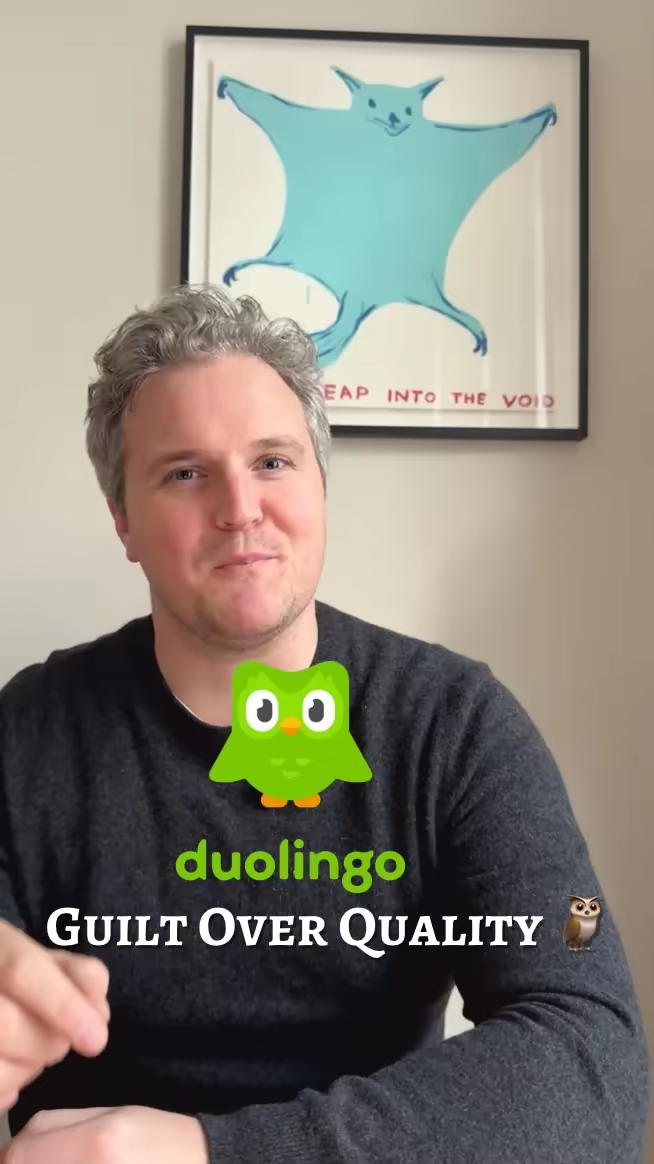
THE GIST ON DUOLINGO: "Guilt Over Quality"

What problem did Duolingo solve?
Everyone wants to learn a language. Very few want to do the work. That's a motivation problem.
Competitors tried to solve it with better teaching, lessons and apps. Duolingo solved it with a psychotic owl that makes you feel guilty.
How does the guilt work?
It made the cost of not using the app higher than the effort of using it. The threatening push notifications, the passive aggressive guilt trips, the 500 day streak you're about to lose. The owl's personality keeps you coming back, not the lessons.
What is the lesson?
Every competitor asked how to make it easier to learn. Duolingo asked how to make it harder not to learn. Making something easier hits a ceiling, but making not doing it uncomfortable is infinite.
Don't compete on features, compete on consequences. It brought in a billion dollars in revenue and 135 million active users, while better products are invisible. Retaining people is worth more than delighting them.
Would a guilt-tripping app keep you learning?
Your take. One tap, then see how everyone else voted.
Quick answers
How many users does Duolingo have?
135 million, up from 40 million in four years.
What keeps people coming back?
Push notifications, guilt trips and streaks, not the quality of the lessons.
What question did Duolingo ask differently?
How do we make it harder not to learn?
See you on the next one.
What should the next one be? Suggest a topic for Huw to explain
The conversation
Comments
Nothing here yet. Start the conversation: Huw reads every comment before it is published.


