
Deliveroo. Profit from the middle.
Deliveroo has finally made a profit. Demand didn't change and costs didn't fall. Someone else paid for it.
THE GIST ON DELIVEROO: "Who Pays for the Profit"

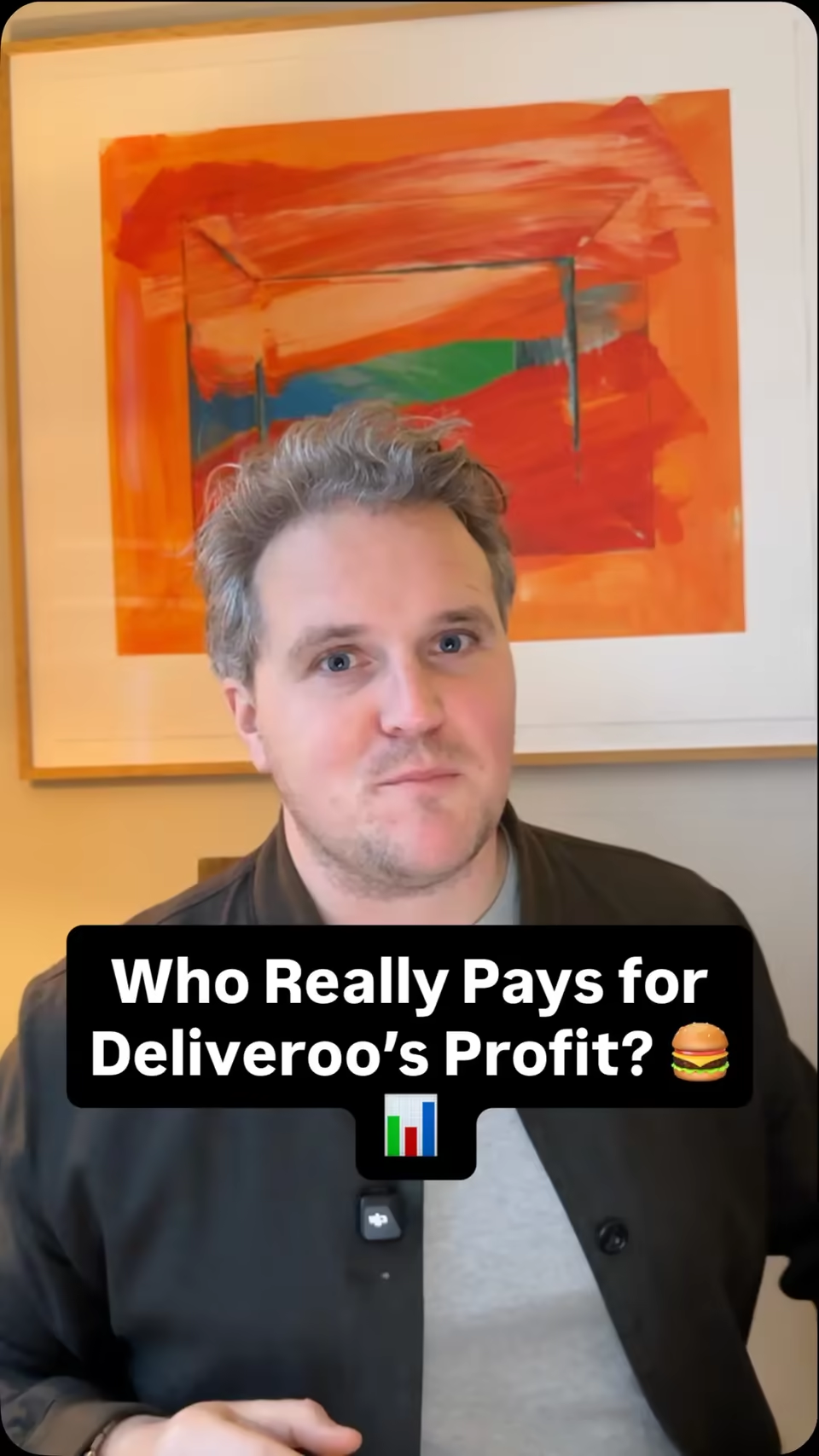
What did Deliveroo report?
Its first period of net profit and positive cash flow. For years, food delivery has been sold on a simple promise: scale it, increase orders, and profit will come. That has never really happened.
Where did the profit come from?
Not from increased demand, because people have been ordering for ages. It hasn't cracked a logistical hurdle, things haven't suddenly become cheaper, and prices haven't been pushed up for us.
It came from the supply side: higher commissions on restaurants, more fees built into partnerships, and subscriptions and add-ons layered on top.
Why restaurants?
The economics are straightforward. Customers are price sensitive and riders are already squeezed, so the platform extracts margin from the least powerful part of the system: restaurants that can't afford to disappear from the app.
Huw's view is that food delivery doesn't naturally scale into margin. It only seems sustainable when it captures more value from suppliers. It's the classic art of being a good middleman: sit in the middle, control demand, monetise dependence.
Do you order direct from the restaurant when you can?
Your take. One tap, then see how everyone else voted.
Quick answers
Where did Deliveroo's profit come from?
From the supply side: higher commissions, more fees in partnerships, and subscriptions and add-ons.
Did delivery get cheaper?
According to Huw, no. Nothing suddenly became cheaper and orders didn't surge.
What is the middleman model?
Sit in the middle, control demand, monetise dependence.
See you on the next one.
What should the next one be? Suggest a topic for Huw to explain
The conversation
Comments
Nothing here yet. Start the conversation: Huw reads every comment before it is published.


